
Short answer: A VIN can establish regulated identity and encoded attributes, but it cannot by itself prove originality, condition, complete options, accident history, or authenticity of every attached component.
To place What Can a Corvette VIN Tell You? in a wider ownership and engineering context, continue with How Originality, Documentation, and Condition Affect Corvette Value.
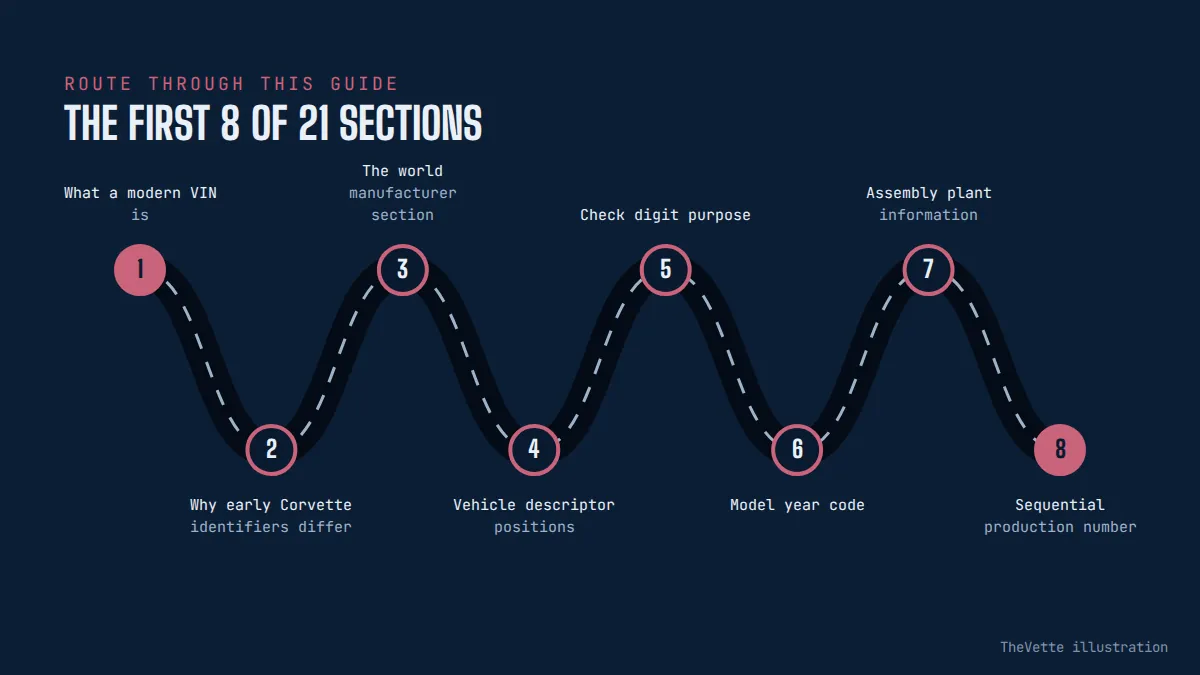
What a modern VIN is
Start with the car in front of you. For what a modern vin is, generation, model year, equipment and condition matter more than a broad claim about every Corvette. Check the owner’s manual and the paperwork that belongs to this VIN, then compare those records with what you can see. A photograph or seller description is a useful lead, but it is not the last word.
Safety sets the boundary for what a modern vin is. Tire condition, braking, visibility, electrical work and performance driving should follow the exact model-year instructions and qualified advice. Internet experience can suggest what to inspect, but it cannot see this car, confirm its modifications or accept the risk for the owner.
The point of checking what a modern vin is is not to eliminate every future expense. It is to avoid surprises large enough to change the ownership plan. Once this item is understood, move to why early corvette identifiers differ and ask whether the two findings still support the same answer to “What Can a Corvette VIN Tell You?.”
Why early Corvette identifiers differ
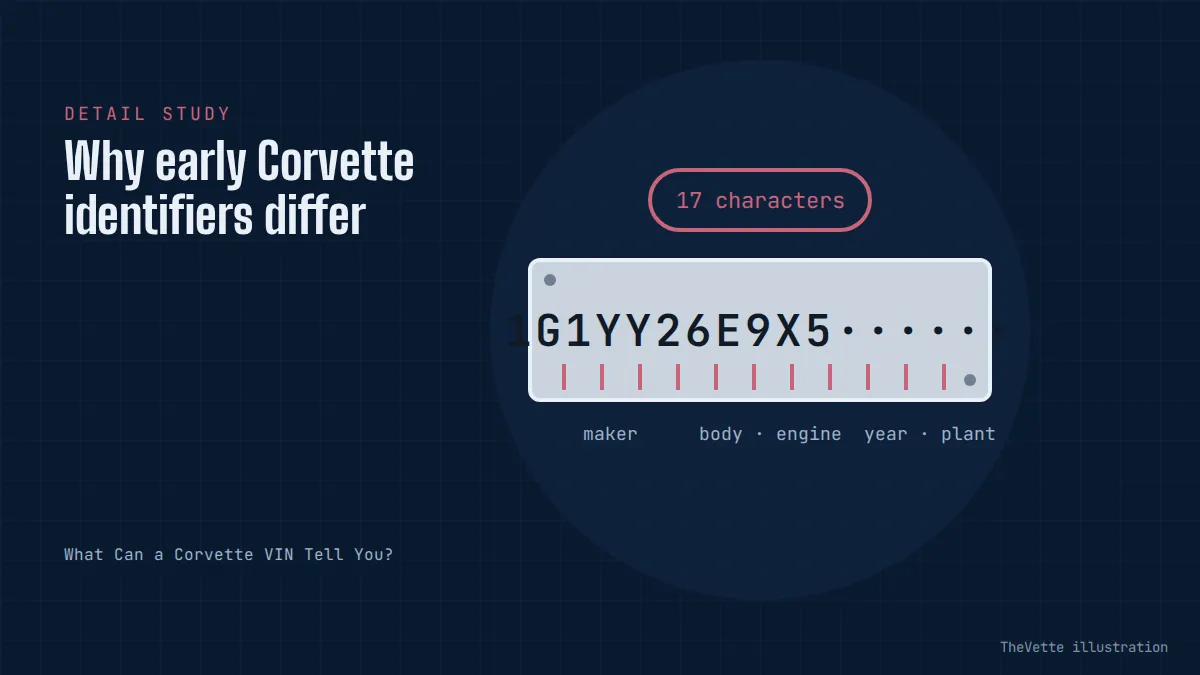
Why early Corvette identifiers differ often changes the answer to “What Can a Corvette VIN Tell You?” because two similar-looking Corvettes can have very different histories. Note the model year, options, mileage and previous use before deciding what is normal. Service receipts, labels and a hands-on inspection are more helpful than a rule repeated without context.
US owners also need to account for bodywork and exterior inspection, local weather, state rules, insurance terms and nearby service. Record dates, mileage, warnings, tire markings, invoices and modifications that relate to why early corvette identifiers differ. Very low mileage does not stop rubber, fluids, batteries and seals from aging; regular use is not automatically a fault when maintenance is documented.
A good answer about why early corvette identifiers differ should lead to an action: accept the condition, negotiate with a real estimate, request another document, or walk away. It should not end with an unsupported promise. Next, review the world manufacturer section so that one appealing feature does not hide a poor overall match.
The world manufacturer section
Owners tend to notice the world manufacturer section after purchase, when changing course is expensive. Bring it into the decision early. Write down what the car needs, what the seller can support with records, and what still needs a specialist’s opinion. That short list makes comparison shopping clearer and keeps excitement from setting the budget.
Cost is part of the world manufacturer section, even when the item works today. Ask what replacement or correction would cost locally, how long parts usually take to arrive, and whether an independent Corvette shop can do the work. A written estimate is more useful than rounding every possibility into a vague “maintenance” allowance.
The point of checking the world manufacturer section is not to eliminate every future expense. It is to avoid surprises large enough to change the ownership plan. Once this item is understood, move to vehicle descriptor positions and ask whether the two findings still support the same answer to “What Can a Corvette VIN Tell You?.”
Vehicle descriptor positions
There is a practical way to judge vehicle descriptor positions: match the Corvette to the way it will be used. A weekend car, interstate tourer, commuter and track-day car ask different things of the same equipment. The best choice is the one whose present condition and configuration suit that job without relying on repairs or changes that have not happened yet.
Look for a consistent story around vehicle descriptor positions. Wear, invoices, title history, fluid condition and the seller’s explanation should broadly agree. One fresh component surrounded by neglected systems deserves questions, but an imperfection with a clear history may be easy to plan for. The goal is understanding, not finding an ageless car.
A good answer about vehicle descriptor positions should lead to an action: accept the condition, negotiate with a real estimate, request another document, or walk away. It should not end with an unsupported promise. Next, review check digit purpose so that one appealing feature does not hide a poor overall match.
Check digit purpose
Start with the car in front of you. For check digit purpose, generation, model year, equipment and condition matter more than a broad claim about every Corvette. Check the owner’s manual and the paperwork that belongs to this VIN, then compare those records with what you can see. A photograph or seller description is a useful lead, but it is not the last word.
Safety sets the boundary for check digit purpose. Tire condition, braking, visibility, electrical work and performance driving should follow the exact model-year instructions and qualified advice. Internet experience can suggest what to inspect, but it cannot see this car, confirm its modifications or accept the risk for the owner.
The point of checking check digit purpose is not to eliminate every future expense. It is to avoid surprises large enough to change the ownership plan. Once this item is understood, move to model year code and ask whether the two findings still support the same answer to “What Can a Corvette VIN Tell You?.”
Model year code
Model year code often changes the answer to “What Can a Corvette VIN Tell You?” because two similar-looking Corvettes can have very different histories. Note the model year, options, mileage and previous use before deciding what is normal. Service receipts, labels and a hands-on inspection are more helpful than a rule repeated without context.
US owners also need to account for long-distance usability, local weather, state rules, insurance terms and nearby service. Record dates, mileage, warnings, tire markings, invoices and modifications that relate to model year code. Very low mileage does not stop rubber, fluids, batteries and seals from aging; regular use is not automatically a fault when maintenance is documented.
A good answer about model year code should lead to an action: accept the condition, negotiate with a real estimate, request another document, or walk away. It should not end with an unsupported promise. Next, review assembly plant information so that one appealing feature does not hide a poor overall match.
Assembly plant information
Owners tend to notice assembly plant information after purchase, when changing course is expensive. Bring it into the decision early. Write down what the car needs, what the seller can support with records, and what still needs a specialist’s opinion. That short list makes comparison shopping clearer and keeps excitement from setting the budget.
Cost is part of assembly plant information, even when the item works today. Ask what replacement or correction would cost locally, how long parts usually take to arrive, and whether an independent Corvette shop can do the work. A written estimate is more useful than rounding every possibility into a vague “maintenance” allowance.
The point of checking assembly plant information is not to eliminate every future expense. It is to avoid surprises large enough to change the ownership plan. Once this item is understood, move to sequential production number and ask whether the two findings still support the same answer to “What Can a Corvette VIN Tell You?.”
Sequential production number
There is a practical way to judge sequential production number: match the Corvette to the way it will be used. A weekend car, interstate tourer, commuter and track-day car ask different things of the same equipment. The best choice is the one whose present condition and configuration suit that job without relying on repairs or changes that have not happened yet.
Look for a consistent story around sequential production number. Wear, invoices, title history, fluid condition and the seller’s explanation should broadly agree. One fresh component surrounded by neglected systems deserves questions, but an imperfection with a clear history may be easy to plan for. The goal is understanding, not finding an ageless car.
A good answer about sequential production number should lead to an action: accept the condition, negotiate with a real estimate, request another document, or walk away. It should not end with an unsupported promise. Next, review read the physical plate carefully so that one appealing feature does not hide a poor overall match.
Read the physical plate carefully
Start with the car in front of you. For read the physical plate carefully, generation, model year, equipment and condition matter more than a broad claim about every Corvette. Check the owner’s manual and the paperwork that belongs to this VIN, then compare those records with what you can see. A photograph or seller description is a useful lead, but it is not the last word.
Safety sets the boundary for read the physical plate carefully. Tire condition, braking, visibility, electrical work and performance driving should follow the exact model-year instructions and qualified advice. Internet experience can suggest what to inspect, but it cannot see this car, confirm its modifications or accept the risk for the owner.
The point of checking read the physical plate carefully is not to eliminate every future expense. It is to avoid surprises large enough to change the ownership plan. Once this item is understood, move to match title registration and car and ask whether the two findings still support the same answer to “What Can a Corvette VIN Tell You?.”
Match title registration and car
Match title registration and car often changes the answer to “What Can a Corvette VIN Tell You?” because two similar-looking Corvettes can have very different histories. Note the model year, options, mileage and previous use before deciding what is normal. Service receipts, labels and a hands-on inspection are more helpful than a rule repeated without context.
US owners also need to account for common wear patterns, local weather, state rules, insurance terms and nearby service. Record dates, mileage, warnings, tire markings, invoices and modifications that relate to match title registration and car. Very low mileage does not stop rubber, fluids, batteries and seals from aging; regular use is not automatically a fault when maintenance is documented.
A good answer about match title registration and car should lead to an action: accept the condition, negotiate with a real estimate, request another document, or walk away. It should not end with an unsupported promise. Next, review door labels and certification data so that one appealing feature does not hide a poor overall match.
Door labels and certification data
Owners tend to notice door labels and certification data after purchase, when changing course is expensive. Bring it into the decision early. Write down what the car needs, what the seller can support with records, and what still needs a specialist’s opinion. That short list makes comparison shopping clearer and keeps excitement from setting the budget.
Cost is part of door labels and certification data, even when the item works today. Ask what replacement or correction would cost locally, how long parts usually take to arrive, and whether an independent Corvette shop can do the work. A written estimate is more useful than rounding every possibility into a vague “maintenance” allowance.
The point of checking door labels and certification data is not to eliminate every future expense. It is to avoid surprises large enough to change the ownership plan. Once this item is understood, move to option labels and build documentation and ask whether the two findings still support the same answer to “What Can a Corvette VIN Tell You?.”
Option labels and build documentation
There is a practical way to judge option labels and build documentation: match the Corvette to the way it will be used. A weekend car, interstate tourer, commuter and track-day car ask different things of the same equipment. The best choice is the one whose present condition and configuration suit that job without relying on repairs or changes that have not happened yet.
Look for a consistent story around option labels and build documentation. Wear, invoices, title history, fluid condition and the seller’s explanation should broadly agree. One fresh component surrounded by neglected systems deserves questions, but an imperfection with a clear history may be easy to plan for. The goal is understanding, not finding an ageless car.
A good answer about option labels and build documentation should lead to an action: accept the condition, negotiate with a real estimate, request another document, or walk away. It should not end with an unsupported promise. Next, review engine and component numbers so that one appealing feature does not hide a poor overall match.
Engine and component numbers
Start with the car in front of you. For engine and component numbers, generation, model year, equipment and condition matter more than a broad claim about every Corvette. Check the owner’s manual and the paperwork that belongs to this VIN, then compare those records with what you can see. A photograph or seller description is a useful lead, but it is not the last word.
Safety sets the boundary for engine and component numbers. Tire condition, braking, visibility, electrical work and performance driving should follow the exact model-year instructions and qualified advice. Internet experience can suggest what to inspect, but it cannot see this car, confirm its modifications or accept the risk for the owner.
The point of checking engine and component numbers is not to eliminate every future expense. It is to avoid surprises large enough to change the ownership plan. Once this item is understood, move to why online decoders can disagree and ask whether the two findings still support the same answer to “What Can a Corvette VIN Tell You?.”
Why online decoders can disagree
Why online decoders can disagree often changes the answer to “What Can a Corvette VIN Tell You?” because two similar-looking Corvettes can have very different histories. Note the model year, options, mileage and previous use before deciding what is normal. Service receipts, labels and a hands-on inspection are more helpful than a rule repeated without context.
US owners also need to account for model-year differences, local weather, state rules, insurance terms and nearby service. Record dates, mileage, warnings, tire markings, invoices and modifications that relate to why online decoders can disagree. Very low mileage does not stop rubber, fluids, batteries and seals from aging; regular use is not automatically a fault when maintenance is documented.
A good answer about why online decoders can disagree should lead to an action: accept the condition, negotiate with a real estimate, request another document, or walk away. It should not end with an unsupported promise. Next, review vin cloning and altered identifiers so that one appealing feature does not hide a poor overall match.
VIN cloning and altered identifiers
Owners tend to notice vin cloning and altered identifiers after purchase, when changing course is expensive. Bring it into the decision early. Write down what the car needs, what the seller can support with records, and what still needs a specialist’s opinion. That short list makes comparison shopping clearer and keeps excitement from setting the budget.
Cost is part of vin cloning and altered identifiers, even when the item works today. Ask what replacement or correction would cost locally, how long parts usually take to arrive, and whether an independent Corvette shop can do the work. A written estimate is more useful than rounding every possibility into a vague “maintenance” allowance.
The point of checking vin cloning and altered identifiers is not to eliminate every future expense. It is to avoid surprises large enough to change the ownership plan. Once this item is understood, move to history reports have blind spots and ask whether the two findings still support the same answer to “What Can a Corvette VIN Tell You?.”
History reports have blind spots
There is a practical way to judge history reports have blind spots: match the Corvette to the way it will be used. A weekend car, interstate tourer, commuter and track-day car ask different things of the same equipment. The best choice is the one whose present condition and configuration suit that job without relying on repairs or changes that have not happened yet.
Look for a consistent story around history reports have blind spots. Wear, invoices, title history, fluid condition and the seller’s explanation should broadly agree. One fresh component surrounded by neglected systems deserves questions, but an imperfection with a clear history may be easy to plan for. The goal is understanding, not finding an ageless car.
A good answer about history reports have blind spots should lead to an action: accept the condition, negotiate with a real estimate, request another document, or walk away. It should not end with an unsupported promise. Next, review state title brands so that one appealing feature does not hide a poor overall match.
State title brands
Start with the car in front of you. For state title brands, generation, model year, equipment and condition matter more than a broad claim about every Corvette. Check the owner’s manual and the paperwork that belongs to this VIN, then compare those records with what you can see. A photograph or seller description is a useful lead, but it is not the last word.
Safety sets the boundary for state title brands. Tire condition, braking, visibility, electrical work and performance driving should follow the exact model-year instructions and qualified advice. Internet experience can suggest what to inspect, but it cannot see this car, confirm its modifications or accept the risk for the owner.
The point of checking state title brands is not to eliminate every future expense. It is to avoid surprises large enough to change the ownership plan. Once this item is understood, move to documentation beyond the vin and ask whether the two findings still support the same answer to “What Can a Corvette VIN Tell You?.”
Documentation beyond the VIN
Documentation beyond the VIN often changes the answer to “What Can a Corvette VIN Tell You?” because two similar-looking Corvettes can have very different histories. Note the model year, options, mileage and previous use before deciding what is normal. Service receipts, labels and a hands-on inspection are more helpful than a rule repeated without context.
US owners also need to account for smart modifications, local weather, state rules, insurance terms and nearby service. Record dates, mileage, warnings, tire markings, invoices and modifications that relate to documentation beyond the vin. Very low mileage does not stop rubber, fluids, batteries and seals from aging; regular use is not automatically a fault when maintenance is documented.
A good answer about documentation beyond the vin should lead to an action: accept the condition, negotiate with a real estimate, request another document, or walk away. It should not end with an unsupported promise. Next, review when an expert is appropriate so that one appealing feature does not hide a poor overall match.
When an expert is appropriate
Owners tend to notice when an expert is appropriate after purchase, when changing course is expensive. Bring it into the decision early. Write down what the car needs, what the seller can support with records, and what still needs a specialist’s opinion. That short list makes comparison shopping clearer and keeps excitement from setting the budget.
Cost is part of when an expert is appropriate, even when the item works today. Ask what replacement or correction would cost locally, how long parts usually take to arrive, and whether an independent Corvette shop can do the work. A written estimate is more useful than rounding every possibility into a vague “maintenance” allowance.
The point of checking when an expert is appropriate is not to eliminate every future expense. It is to avoid surprises large enough to change the ownership plan. Once this item is understood, move to build an identity evidence file and ask whether the two findings still support the same answer to “What Can a Corvette VIN Tell You?.”
Build an identity evidence file
There is a practical way to judge build an identity evidence file: match the Corvette to the way it will be used. A weekend car, interstate tourer, commuter and track-day car ask different things of the same equipment. The best choice is the one whose present condition and configuration suit that job without relying on repairs or changes that have not happened yet.
Look for a consistent story around build an identity evidence file. Wear, invoices, title history, fluid condition and the seller’s explanation should broadly agree. One fresh component surrounded by neglected systems deserves questions, but an imperfection with a clear history may be easy to plan for. The goal is understanding, not finding an ageless car.
A good answer about build an identity evidence file should lead to an action: accept the condition, negotiate with a real estimate, request another document, or walk away. It should not end with an unsupported promise. Next, review what a modern vin is so that one appealing feature does not hide a poor overall match.
Continue with the related TheVette guide
Identity evidence is one part of the larger originality record. Read the related guide before making the final decision.